Helixfield

Northbrook, Illinois · Mid-market operators


Put AI on the work your team already does every week.

An agent is a software helper that does a repeating job — new inquiries, order exceptions, invoice follow-up. Helixfield sets that helper up, teaches someone to run it, and stays if you want us to. A person still says when something can leave the company.

We are not locked to one AI brand. Today we work with OpenAI, Grok, Claude, Gemini, Cursor, or whatever fits the job. How we organize the work today is called Loop & Graph: a loop is a job that already repeats; a graph is a shared list of facts. When a better way ships, we use that. First step is a short note. If the job is clear, a Field Survey is $9,500.

Based in Northbrook · on-site Chicago metro · remote nationwide.

Helixfield studio table with a copper helix and a hand-drawn operating graph.

Fit

Who this is for.

This is for

  • Owners and operators of mid-size companies — often $3–80 million — who can name one job that repeats.
  • Someone who will read a draft and say no when it is sloppy. A partner, an ops lead, a controller.
  • Companies that already pay for email, CRM, or accounting software — and still start every week from a blank page.

This is not

  • “We need AI” with no job named, no owner, and no tools already in use.
  • Chatbots that talk to the public with no one checking the answers.
  • Big transformation programs, fake case studies, or promised savings we cannot prove.

How you buy

Look first. Then set one helper live.

You do not buy “AI” in the abstract. Most companies start with a Field Survey, then one of the published setups. You pay your own AI seats.

What a Field Survey is·Full rate card

How it works

A repeating job. A shared list of facts.

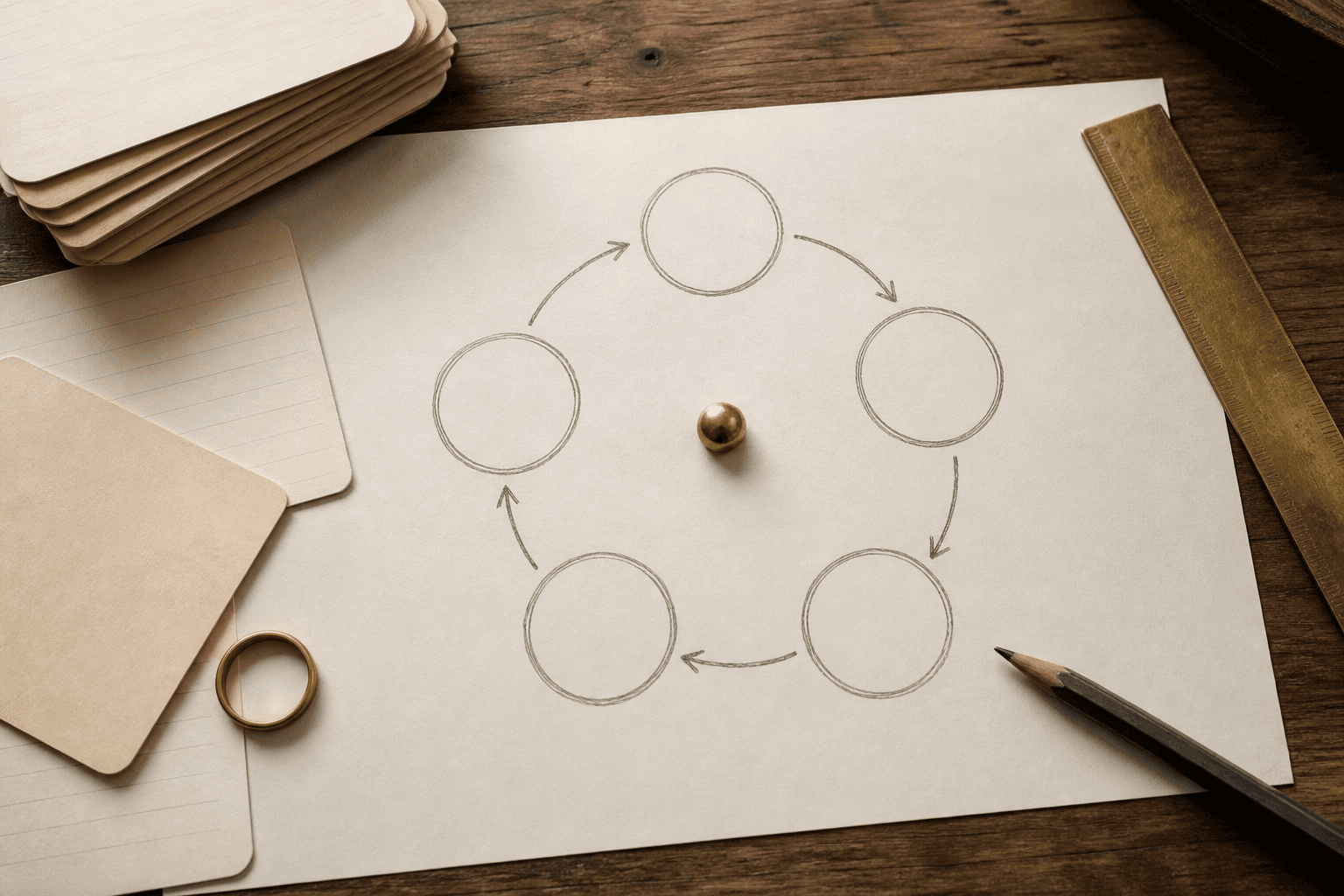
Today we call that Loop & Graph. A loop is a job that already repeats. A graph is a shared list of facts. The helper gathers those facts, does the job, writes down what changed, and saves it. Chat history is not memory. When a better method ships, we use that.

Overhead still life of a loop drawn on drafting paper around a copper pin.
  1. 01

    Gather the facts

    Before the helper answers or acts, it pulls the facts you already agreed on. Hunches stay labeled as hunches. Guessed numbers stay out.

  2. 02

    Do the job

    Draft, route, or look something up — with those facts in view. If a needed fact is missing, it asks. It does not invent a number, a client, or a permission.

  3. 03

    Write down what changed

    After the turn, it lists new facts, decisions, and risks. Each item is marked proposed, accepted, or ask.

  4. 04

    Save it

    Those notes go back into the shared list. Only a person can mark an important fact as final. The next turn is smarter because this one closed.

About

A small practice in Northbrook.

You deal with a person, not a bench of unnamed consultants. Four desks do the work. We write things down so the system does not live in one head.

Autumn street of brick and limestone buildings in Northbrook, Illinois.
  • Delivery Studio

    Designs, builds, and tests the helper — and the shared facts it must follow. This is where the AI engineering happens.

  • Instruction Desk

    Shows your people how to brief the helper and reject a bad draft.

  • Client Operations

    Watches the helper after launch — weekly notes, updates, and help when something breaks.

  • Research Bench

    Tracks which AI tools are worth using this quarter, so we do not lock you to last year’s stack.

About Helixfield·Northbrook office·Industries

Questions

Questions people ask first

Briefing

Tell us the job that repeats.

We will say whether a $9,500 Field Survey is the right first step — or that it is not.

Request a briefing